
1.2357 Material Detailed Information
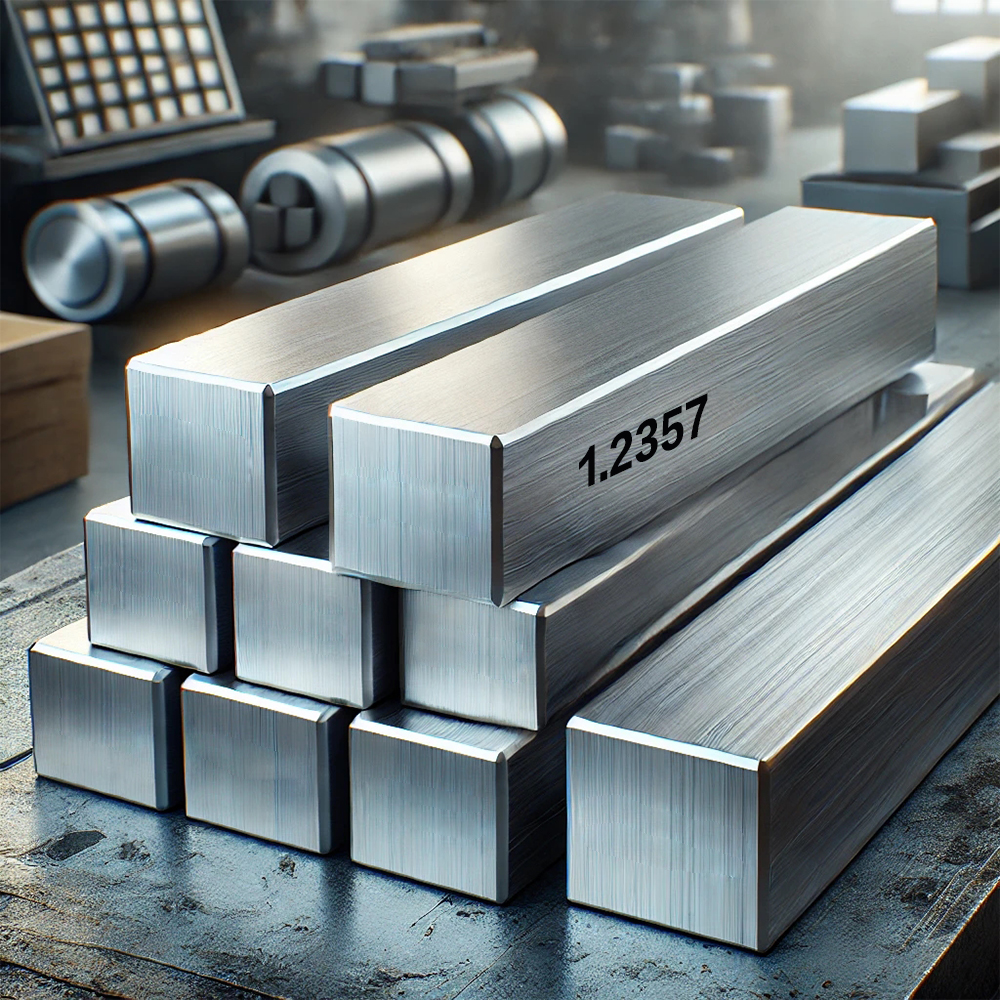
1.2357 is a high-performance cold work tool steel commonly used in applications requiring excellent wear resistance, toughness, and high compressive strength. It is part of the high-carbon, high-chromium tool steels, which are known for their outstanding wear resistance and hardness. 1.2357 is mainly used in the plastic injection molding, cold forming, and stamping industries, where it faces high mechanical stress and wear conditions.
Due to its high chromium content, 1.2357 offers good corrosion resistance, especially when compared to many other cold work tool steels. It is also highly resistant to abrasive wear and mechanical fatigue.
Key Features
- Improved Purity: The ESR process results in a cleaner material, reducing impurities such as sulfur and phosphorus, and improving overall mechanical properties.
- Superior Heat Resistance: Excellent resistance to thermal fatigue and heat checking in high-temperature environments.
- Good Toughness: Excellent toughness and impact resistance, making it suitable for applications exposed to high thermal and mechanical stresses.
- Excellent Wear Resistance: Offers good wear resistance, especially in applications involving metal-forming or plastic molding processes.
- Enhanced Hot Hardness: Retains hardness at elevated temperatures, providing superior performance in hot work applications.
- Improved Machinability: ESR-treated 1.2343 offers better machinability compared to the standard 1.2343, allowing for more precise and easier machining.
Chemical Composition
| Element | Composition (%) |
| Carbon (C) | 0.95 – 1.05 |
| Silicon (Si) | 0.20 – 0.50 |
| Manganese (Mn) | 0.30 – 0.50 |
| Chromium (Cr) | 12.00 – 14.00 |
| Molybdenum (Mo) | 0.80 – 1.20 |
| Vanadium (V) | 0.10 – 0.30 |
| Phosphorus (P) | ≤ 0.030 |
| Sulfur (S) | ≤ 0.030 |
Note: The high chromium and molybdenum content provides 1.2357 with excellent wear resistance and toughness.
Mechanical Properties
| Property | Value |
| Hardness (Annealed) | ≤ 250 HB |
| Hardness (Hardened & Tempered) | 55 – 60 HRC |
| Tensile Strength | ~1,250 – 1,400 MPa |
| Yield Strength | ~1,000 – 1,200 MPa |
| Elongation | 5 – 8% |
| Impact Toughness | Moderate to Good |
1.2357 vs. 1.2379 vs. AISI D2
| Property | 1.2357 | 1.2379 | AISI D2 |
| Hardness (After Tempering) | 55-60 HRC | 55-60 HRC | 58-62 HRC |
| Wear Resistance | Excellent | Excellent | Excellent |
| Toughness | Good | Moderate | Moderate |
| Corrosion Resistance | Good | Fair | Fair |
| Fatigue Resistance | Good | Good | Moderate |
| Machinability | Good | Moderate | Good |
Applications
1.2357 is used primarily in cold work tooling and other demanding industrial applications, including:
- Plastic injection molds for abrasive plastics, engineering plastics, and thermoplastics that require high precision and durability.
- Stamping dies, blanking dies, and cutting tools where wear resistance and hardness are critical.
- Forming tools in industries that require high strength and resistance to wear under severe mechanical stress.
- Cold heading and cold forging dies that need to withstand extreme pressures.
- Tooling for the automotive and aerospace industries, where the combination of high strength and wear resistance is essential.
Heat Treatment Process
Annealing
- Heat to 850–900°C and then cool slowly to relieve internal stresses.
Hardening
- Heat to 1,030–1,100°C and soak for an appropriate time, followed by quenching in oil or air for uniform hardness.
Tempering
- Heat to 500–550°C to achieve the desired hardness of 55-60 HRC.
Surface Treatment
- Nitriding or PVD coating can be applied to improve wear resistance in specific applications, enhancing surface durability and extending tool life.
Alternative Materials
- 1.2379 (D2): A high-carbon, high-chromium tool steel similar to 1.2357 but with slightly better wear resistance and toughness at the expense of machinability.
- AISI D2: Often used in cold work and high-wear applications, AISI D2 has comparable wear resistance but can be more difficult to machine and harder to heat treat than 1.2357.
- 1.2767: Offers higher toughness and impact resistance for cold forming dies but may not match the wear resistance of 1.2357 in abrasive conditions.
Conclusion
1.2357 is a high-performance cold work tool steel that provides excellent wear resistance, high hardness, and good toughness. Its high chromium content ensures corrosion resistance, making it suitable for plastic injection molds, cutting tools, and forming dies subjected to high mechanical stress and wear. The material’s toughness, wear resistance, and fatigue resistance make it ideal for use in cold work tooling applications, particularly in industries like automotive, aerospace, and engineering plastics.