
1.2379 Tool Steel Detailed Information
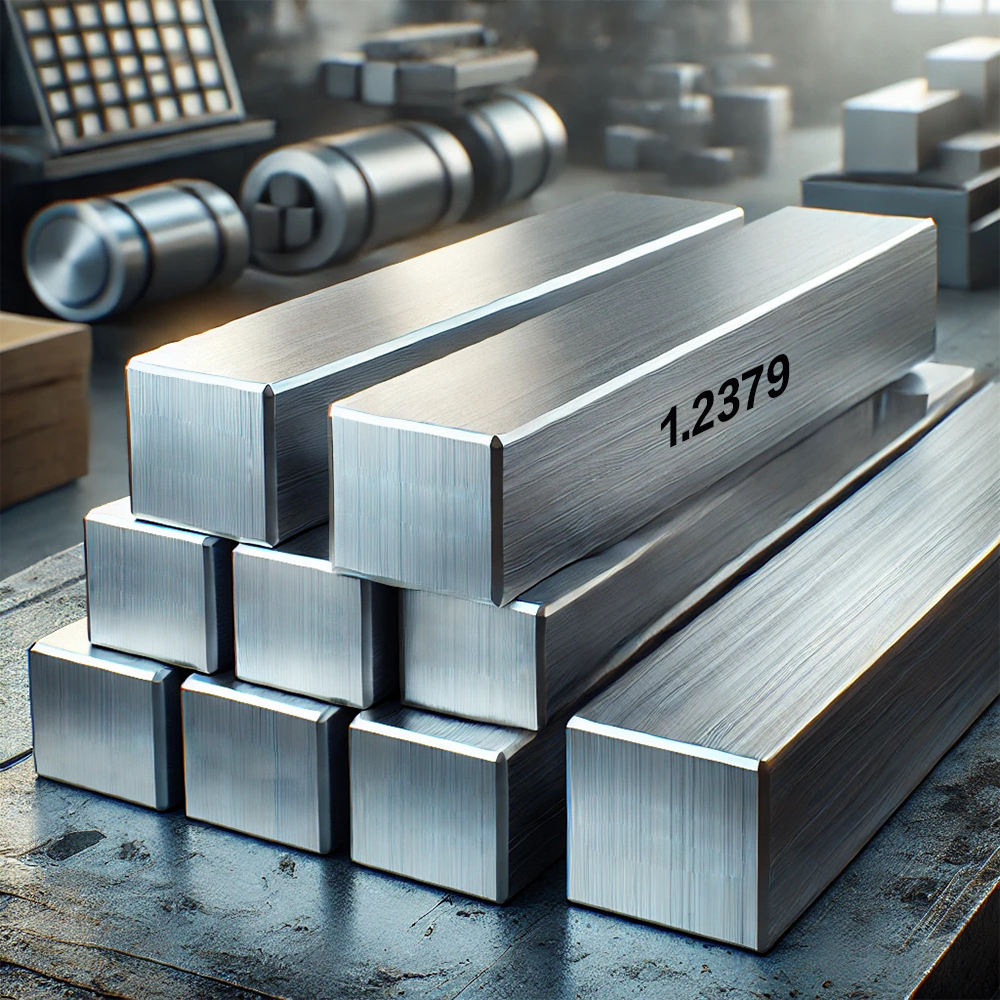
1.2379 is a high-carbon, high-chromium cold work tool steel, also known as X153CrMoV12 under the DIN standard. It is equivalent to AISI D2 and JIS SKD11. This steel is widely used for cutting tools, stamping dies, and wear-resistant components due to its excellent hardness, wear resistance, and toughness.
Key Features
High Wear Resistance
- Extremely durable in abrasive environments.
- Used in stamping dies, cutting tools, and cold work applications.
Good Toughness & Strength
- Higher toughness than conventional high-carbon steels.
High Hardness After Heat Treatment
- Achieves 58 – 62 HRC, suitable for high-performance tools.
Good Dimensional Stability
- Minimal deformation after heat treatment.
Moderate Corrosion Resistance
- Better than carbon steels, but lower than stainless steels.
Chemical Composition
| Element | Composition (%) |
| Carbon (C) | 1.50 – 1.60 |
| Chromium (Cr) | 11.00 – 12.50 |
| Molybdenum (Mo) | 0.70 – 1.00 |
| Vanadium (V) | 0.70 – 1.00 |
| Silicon (Si) | ≤ 0.40 |
| Manganese (Mn) | ≤ 0.60 |
| Phosphorus (P) | ≤ 0.030 |
| Sulfur (S) | ≤ 0.030 |
- High Carbon (C) Content → Provides high hardness and wear resistance.
- High Chromium (Cr) Content → Improves corrosion resistance and toughness.
- Molybdenum (Mo) & Vanadium (V) → Enhance hardenability and strength.
Mechanical Properties
| Property | Value |
| Density | 7.7 – 7.8 g/cm³ |
| Tensile Strength | 800 – 1,500 MPa |
| Yield Strength | ≥ 1,800 MPa |
| Elongation | ≥ 10% |
| Hardness (Annealed) | ≤ 250 HB |
| Hardness (Hardened) | 58 – 62 HRC |
| Thermal Conductivity | 20.0 W/m·K |
| Melting Point | 1,420 – 1,460°C |
- Excellent hardness (up to 62 HRC), making it highly wear-resistant.
- Good toughness and dimensional stability after heat treatment.
1.2379 vs. Other Tool Steels
| Property | 1.2379 (D2) | 1.2080 (D3) | SKD11 | H13 (Hot Work) |
| Hardness (HRC) | 58 – 62 | 58 – 60 | 58 – 62 | 48 – 52 |
| Wear Resistance | Excellent | High | Excellent | Moderate |
| Toughness | Good | Lower | Good | Very High |
| Corrosion Resistance | Moderate | Low | Moderate | Good |
| Application | Cold Work | Cold Work | Cold Work | Hot Work |
Why Choose 1.2379?
- More wear-resistant than 1.2080 (D3).
- Higher toughness than carbon tool steels.
- Excellent for cold work applications with high wear.
Applications
Cutting & Blanking Tools
- Shearing blades, punches, and industrial knives.
Cold Work Dies & Molds
- Stamping dies, forming dies, and drawing dies.
Wear-Resistant Parts
- Bearings, gears, and wear plates.
Plastic Molding
- Injection molds and extrusion dies.
Aerospace & Automotive Components
- High-stress mechanical parts.
Heat Treatment Process
Higher tempering temperatures (above 400°C) reduce hardness but improve toughness.
Annealing
- Heat to 850 – 870°C, then slow cool in a furnace.
- Softens the material for easier machining.
Hardening (Quenching)
- Heat to 1,020 – 1,040°C, then oil or air quenching.
- Achieves maximum hardness (58 – 62 HRC).
Tempering
- Heat to 150 – 300°C, then air cool.
- Adjusts hardness and toughness.
Alternative Materials
- 1.2080 (D3) → Higher wear resistance but lower toughness.
- SKD11 → Japanese equivalent with similar properties.
- H13 (1.2344) → Better for hot work applications.
Conclusion
1.2379 tool steel (D2 steel) is a high-hardness, wear-resistant material widely used in cold work tooling, cutting tools, and wear-resistant components.
Best for: Stamping dies, industrial knives, and high-wear applications.
Why Choose 1.2379? It offers an excellent balance of hardness, toughness, and wear resistance.