
1.2767 Material Detailed Information
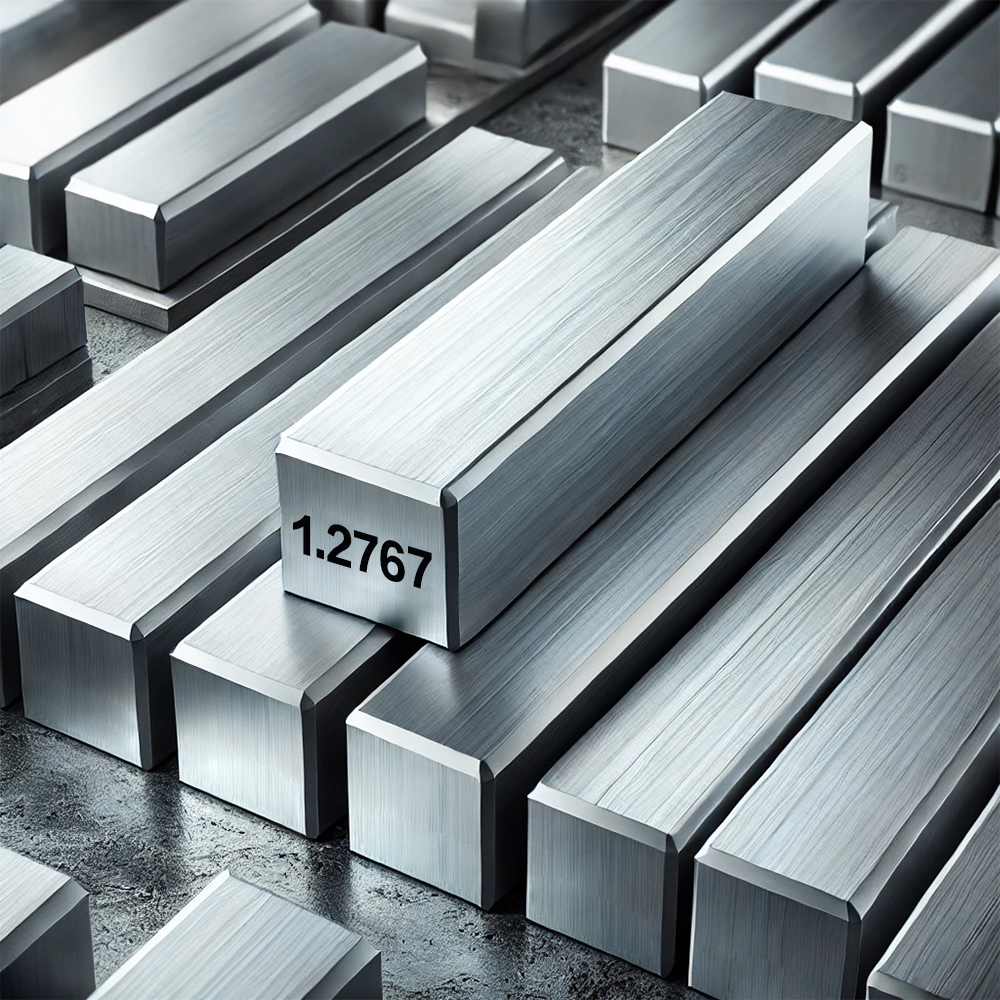
1.2767 is a high-performance tool steel that is widely used in cold work tooling applications. Known for its excellent toughness, impact resistance, and high strength, it is commonly used for cold forming dies, stamping tools, and other high-stress applications. It is a molybdenum-alloyed, high-carbon tool steel with good resistance to wear and excellent fatigue resistance. This material also offers high strength and good machinability in both its annealed and hardened states.
1.2767 is commonly used in the automotive, aerospace, and plastic industries for components that need to withstand high pressure and abrasive wear without sacrificing toughness.
Key Features
- Excellent Toughness: 1.2767 provides outstanding toughness, making it ideal for cold work tooling that must withstand high impact or shock loads without failure.
- Good Wear Resistance: While not as wear-resistant as higher chromium steels, 1.2767 offers good resistance to wear under abrasive conditions.
- High Strength: The steel maintains high strength even at elevated temperatures, which is crucial for applications such as cold heading or cold forming.
- Fatigue Resistance: Excellent fatigue resistance helps in applications exposed to repeated loading cycles or high-pressure environments.
- Good Machinability: 1.2767 can be easily machined in the annealed state, making it suitable for complex tool designs and applications requiring detailed precision.
- Good Corrosion Resistance: While not as corrosion-resistant as stainless steels, 1.2767 offers better resistance to corrosion compared to other tool steels in humid or moist conditions.
Chemical Composition
| Element | Composition (%) |
| Carbon (C) | 0.40 – 0.50 |
| Silicon (Si) | 0.20 – 0.50 |
| Manganese (Mn) | 0.30 – 0.60 |
| Chromium (Cr) | 1.20 – 1.50 |
| Molybdenum (Mo) | 0.80 – 1.20 |
| Vanadium (V) | 0.10 – 0.30 |
| Phosphorus (P) | ≤ 0.030 |
| Sulfur (S) | ≤ 0.030 |
Note: The molybdenum and chromium content of 1.2767 contribute to its good toughness, wear resistance, and fatigue strength.
Mechanical Properties
| Property | Value |
| Hardness (Annealed) | ≤ 230 HB |
| Hardness (Hardened & Tempered) | 50 – 55 HRC |
| Tensile Strength | ~1,200 – 1,400 MPa |
| Yield Strength | ~1,000 – 1,200 MPa |
| Elongation | 8 – 12% |
| Impact Toughness | Excellent |
1.2767 vs. 1.2343 vs. H13 (AISI)
| Property | 1.2767 | 1.2343 | H13 (AISI) |
| Toughness | Excellent | Good | Good |
| Wear Resistance | Good | Excellent | Good |
| Hardness (Tempered) | 50-55 HRC | 48-52 HRC | 48-52 HRC |
| Fatigue Resistance | Excellent | Good | Good |
| Corrosion Resistance | Moderate | Good | Moderate |
| Machinability | Good | Good | Moderate |
Applications
1.2767 is widely used in cold work tooling and metal forming industries, including:
- Cold forming dies and forging dies, especially for high-stress applications requiring toughness and impact resistance.
- Stamping dies and blanking tools where resistance to abrasive wear is necessary while maintaining toughness under high loads.
- Cutting tools used in metalworking processes that require high strength and impact resistance.
- Extrusion dies, forging tools, and shaping tools that need to withstand high pressure and abrasive conditions.
- Automotive components and aerospace tooling where toughness and high strength are critical.
Heat Treatment Process
Annealing
- Heat to 850–900°C and slow cool in the furnace to relieve internal stresses.
Hardening
- Heat to 1,000–1,050°C, soak for the necessary time, and then quench in oil or air for uniform hardness.
Tempering
- Heat to 500–550°C to achieve the desired hardness of 50-55 HRC. This tempering range ensures optimal toughness and wear resistance.
Surface Treatment
- Nitriding or PVD coating can be applied to improve wear resistance and surface durability, especially in applications exposed to high friction and wear.
Alternative Materials
- 1.2343: A hot work tool steel that offers better heat resistance and wear resistance than 1.2767 but has slightly lower toughness.
- H13 (AISI): Known for high temperature performance, H13 is suitable for hot work applications, whereas 1.2767 is better for cold work where toughness is prioritized over heat resistance.
- 1.2363: Similar to 1.2767 but with better wear resistance and strength, it can be used in more abrasive conditions.
- D2 (AISI): A high-carbon, high-chromium tool steel that offers excellent wear resistance, but with lower toughness compared to 1.2767.
Conclusion
1.2767 is a high-quality tool steel offering excellent toughness, fatigue resistance, and good wear resistance. It is particularly suited for cold work tooling such as cold forming dies, stamping dies, and cutting tools exposed to high impact and abrasive conditions. Its ability to withstand high stress, combined with good machinability, makes it ideal for applications in industries like automotive, aerospace, and metal forming.