
P20 Material Detailed Information
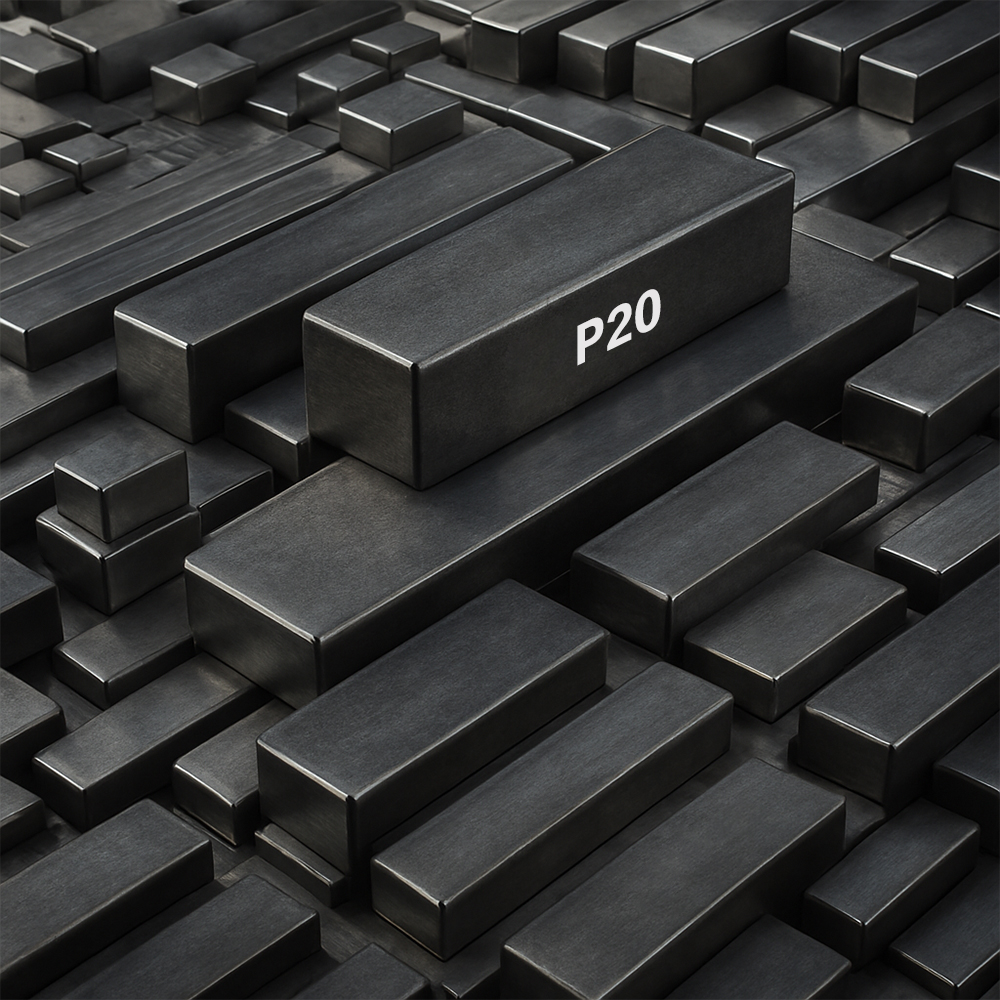
P20 is a medium-carbon tool steel that is widely used in the manufacturing of plastic molds, die-casting molds, and various tooling applications. It offers a good balance between machinability, moderate wear resistance, and toughness, making it an excellent choice for producing molds and tools in industries like plastic injection molding. P20 is a cost-effective option for tools that don’t require the extreme wear resistance of high-carbon steels like SKD11.
Key Features
- Good Machinability: P20 is known for its excellent machinability, making it ideal for applications that involve intricate or complex mold designs. It is easier to process compared to higher-carbon steels like SKD11.
- Moderate Wear Resistance: P20 offers good wear resistance, but it is not as wear-resistant as high-carbon, high-chromium steels like SKD11. It is more suitable for tooling that experiences moderate wear.
- Good Toughness: P20 offers better toughness than SKD11, reducing the risk of cracking and chipping under high-impact conditions.
- Ease of Welding: P20 is easier to weld than higher-carbon tool steels, making it a good choice for applications that require welding.
- Cost-Effective: P20 is a more affordable option compared to higher-performance materials like SKD11, making it ideal for medium-duty tooling applications that require a balance of properties at a lower cost.
Chemical Composition
| Element | Composition (%) |
| Carbon (C) | 0.28 – 0.38 |
| Chromium (Cr) | 1.40 – 1.60 |
| Molybdenum (Mo) | 0.03 – 0.30 |
| Vanadium (V) | ≤ 0.03 |
| Silicon (Si) | ≤ 0.40 |
| Manganese (Mn) | ≤ 1.00 |
| Phosphorus (P) | ≤ 0.025 |
| Sulfur (S) | ≤ 0.025 |
Mechanical Properties
| Property | Value |
| Hardness (Annealed) | ≤ 255 HB |
| Hardness (Hardened & Tempered) | 28 – 32 HRC |
| Tensile Strength | 1000 – 1300 MPa |
| Yield Strength | 800 – 1000 MPa |
| Elongation | ≥ 15% |
| Impact Strength | Moderate toughness after tempering |
Applications
P20 is commonly used in the following applications:
- Plastic Injection Molds: Especially in medium-volume production where toughness and machinability are more important than extreme wear resistance.
- Blow Molds: Used in the production of plastic containers and bottles.
- Die-Casting Molds: For aluminum and zinc die-casting applications.
- Jigs and Fixtures: Used in precision machining applications where moderate wear resistance is needed.
- Press Tools: Such as punching, bending, and forming dies.
- Mold Inserts: Used in molds that require moderate wear resistance and easy machinability.
Heat Treatment Process
Annealing
- Heat to 800–850°C → Slow cooling in the furnace to below 600°C → Air cooling. This softens the material, making it easier to machine.
Hardening
- Heat to 850–880°C → Quench in oil or air depending on the component size to improve hardness and strength.
Tempering
- Heat at 550–650°C for 1-2 hours → Air cooling to achieve the desired hardness of 28-32 HRC while enhancing toughness.
Comparison With SKD11
- Wear Resistance: SKD11 has better wear resistance due to its higher carbon and chromium content. P20 is more suitable for applications where moderate wear resistance is sufficient, such as in plastic molding and medium-duty tools.
- Toughness: P20 offers better toughness compared to SKD11, making it less prone to cracking or chipping, which is an advantage in tooling and mold applications that experience frequent impacts or stress.
- Hardness: SKD11 has a higher hardness range (58-62 HRC), making it more resistant to wear. P20 typically has a hardness of 28-32 HRC after heat treatment, making it less wear-resistant but easier to machine.
- Machinability: P20 is easier to machine than SKD11, which is beneficial for complex mold designs that require tight tolerances.
- Applications: P20 is widely used in plastic molds, die-casting molds, and less demanding tooling, while SKD11 is more suitable for heavy-duty cold work applications that require higher wear resistance and toughness.
Summary
P20 is a versatile tool steel known for its excellent machinability, good toughness, and moderate wear resistance. It is ideal for applications such as plastic mold-making, die-casting, and medium-duty tooling. While it does not offer the extreme wear resistance of high-carbon steels like SKD11, P20 is a cost-effective and durable option for industries requiring tooling with moderate wear resistance and good toughness. Its ability to maintain dimensional stability during heat treatment and ease of machining make it a popular choice in mold and die manufacturing.