
S136H Material Detailed Information
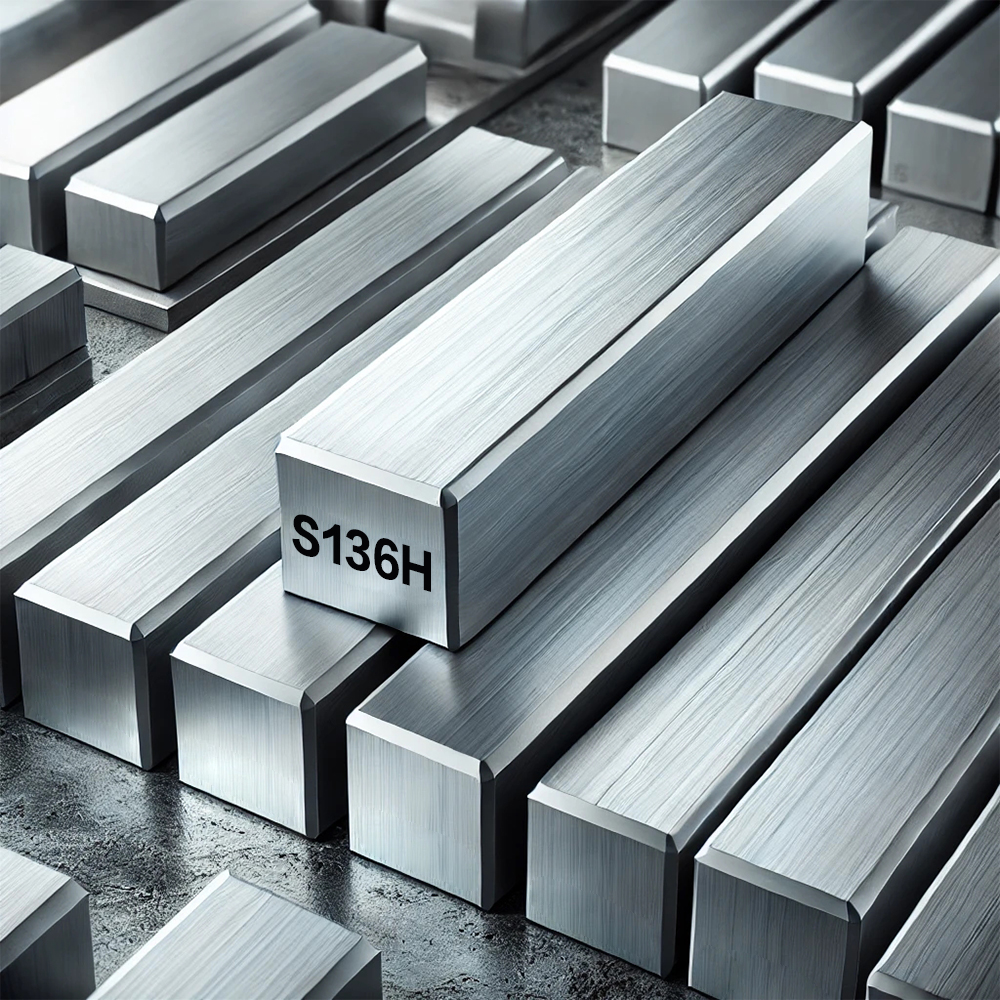
S136H is a high-quality martensitic stainless steel developed primarily for use in plastic mold cavities and corrosion-resistant applications. It is an enhanced version of S136, designed for high demands in precision molds used for the production of plastic parts, especially when resistance to corrosion and wear is critical. This material is widely used in industries such as automotive, electronics, and consumer goods manufacturing due to its excellent corrosion resistance and good wear properties.
S136H provides superior polishability and is designed to deliver long-term performance in aggressive environments, making it suitable for molds that are exposed to high corrosion, wear, and elevated temperatures.
Key Features
- High Corrosion Resistance: S136H is known for its excellent resistance to corrosion in highly corrosive environments, making it ideal for plastic injection molds that handle aggressive chemicals.
- Good Wear Resistance: Offers decent wear resistance, suitable for molding operations that involve abrasive materials like glass-filled plastics.
- Excellent Polishability: Its ability to achieve a mirror finish makes it a popular choice for transparent or aesthetic plastic parts.
- High Strength: With a high tensile strength, S136H is able to withstand high pressure and stress during molding operations.
- Good Hardness Retention: It retains its hardness even after prolonged exposure to high temperatures, which is crucial for plastic molding applications.
- Low Carbon Content: Minimizes the risk of decarburization during heat treatment, which helps improve the surface quality of the mold.
Chemical Composition
| Element | Composition (%) |
| Carbon (C) | 0.38 |
| Silicon (Si) | 0.60 |
| Manganese (Mn) | 0.40 |
| Chromium (Cr) | 13.00 |
| Molybdenum (Mo) | 0.50 |
| Nickel (Ni) | 0.90 |
| Phosphorus (P) | ≤ 0.025 |
| Sulfur (S) | ≤ 0.015 |
Key Features in Composition:
- High Chromium (Cr) Content (13%): Provides excellent corrosion resistance, especially in chloride environments.
- Molybdenum (Mo): Enhances pitting and crevice corrosion resistance, making it suitable for aggressive plastic molding applications.
- Nickel (Ni): Improves toughness and resistance to stress corrosion cracking.
- Low Carbon (C): Ensures better polishability and machinability without sacrificing strength.
Mechanical Properties
| Property | Value |
| Hardness (Annealed) | ~220 HB |
| Hardness (After Heat Treatment) | 48 – 52 HRC |
| Tensile Strength | ~1,400 MPa |
| Yield Strength | ~1,200 MPa |
| Impact Toughness | High |
| Wear Resistance | Good |
| Corrosion Resistance | Excellent |
| Thermal Conductivity | Low |
Key Features:
- Good Hardness: Achieves a hardness of 48–52 HRC after heat treatment, which provides a balance between strength and toughness.
- High Tensile and Yield Strength: Offers excellent resistance to deformation under load.
- Excellent Corrosion Resistance: Performs very well in chloride-based environments and plastic molding processes.
- Impact Toughness: Maintains toughness even at low temperatures and during dynamic loading.
S136H vs. Other Stainless Tool Steels
| Property | S136H | 1.2738 | 1.2083 | 420SS |
| Hardness (After Heat Treatment) | 48-52 HRC | 50-55 HRC | 52-56 HRC | 40-45 HRC |
| Corrosion Resistance | Excellent | Good | Moderate | Good |
| Wear Resistance | Good | Excellent | Good | Moderate |
| Polishability | Excellent | Good | Moderate | Good |
| Toughness | Good | Moderate | High | Moderate |
| Applications | Plastic Molds | Molds for high-temperature plastics | Molds for high-strength applications | Medical devices and general molds |
Why Choose S136H?
- Superior corrosion resistance compared to standard tool steels such as 1.2738 and 420SS.
- Excellent polishability, which is essential for transparent plastic molding.
- Good wear resistance for long-lasting performance in high-precision molding.
Applications
S136H is primarily used in molding applications that require both corrosion resistance and wear resistance, especially for plastic molding. Some of its common applications include:
Plastic Injection Molds
- Cavities, cores, and inserts for transparent plastic parts such as automotive lenses and consumer electronics.
- Injection molds for high-performance plastics like engineering plastics and high-temperature thermoplastics.
Compression Molds
- Molds for rubber or composite materials requiring a balance of strength, durability, and corrosion resistance.
Blow Molding Dies
- Molds for hollow plastic parts like bottles and containers, especially when high finish quality is required.
Medical Molding
- Molds for medical devices and components that demand high corrosion resistance due to exposure to chemicals and sterilization processes.
Heat Treatment Process
Soft Annealing (if Necessary for Machining)
- Heat to 850–900°C, then cool at 20–30°C per hour to 600°C.
- Finally, allow to cool to room temperature to improve machinability.
Hardening
- Preheat at 800–900°C, then heat to 1,000–1,050°C for hardening.
- Quenching can be done by oil, vacuum, or air quenching, depending on the desired results.
Tempering
- Temper at 200–300°C for 2–3 cycles to achieve a final hardness of 48–52 HRC.
Nitriding (Optional)
- Nitriding can be used to enhance surface hardness and wear resistance for molds exposed to abrasive plastics.
Alternative Materials
- 1.2738: A good plastic mold steel but with lower corrosion resistance than S136H.
- 1.2083: Another stainless tool steel that is more wear-resistant but has lower corrosion resistance than S136H.
- 420SS: Offers good corrosion resistance, but lower hardness and polishability compared to S136H.
Conclusion
S136H is a premium stainless steel designed for high-precision plastic molds requiring excellent corrosion resistance, wear resistance, and polishability. Its superior corrosion resistance and high hardness retention make it an ideal choice for molding transparent plastics and high-performance thermoplastics.
Best Choice for: Plastic injection molds, medical molding, and other corrosion-sensitive applications.
Why Choose S136H? Outstanding corrosion resistance, wear resistance, and polishability, especially in plastic molding applications.