
SLD Material Detailed Information
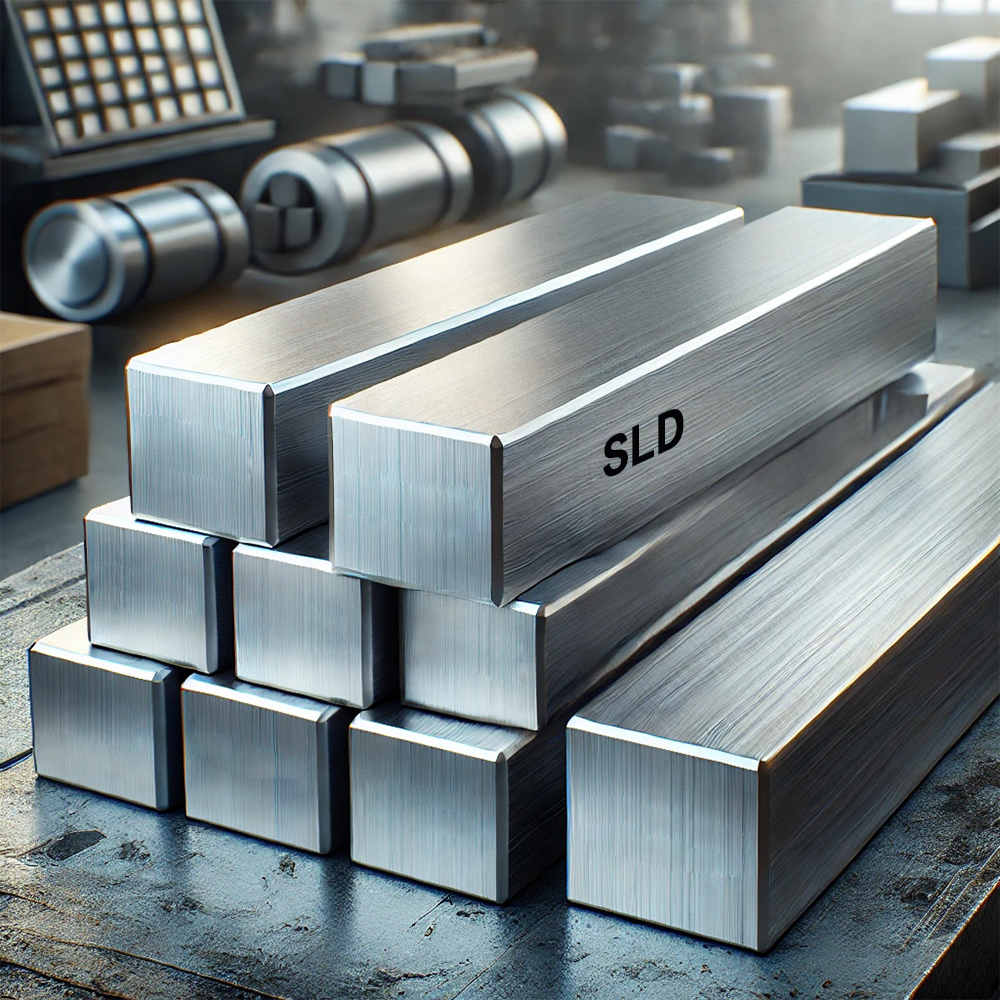
SLD (also known as SKD11 in Japan) is a high-carbon, high-chromium tool steel primarily used for cold work tooling applications. It is known for its excellent wear resistance, hardness, and ability to maintain sharpness under extreme pressure and abrasive conditions. SLD is a versatile tool steel used in industries such as automotive, aerospace, and manufacturing, where durability and wear resistance are crucial for tooling components like dies, blades, punches, and cutting tools.
This material offers a balanced combination of hardness, toughness, and corrosion resistance, making it suitable for tools that require high performance and longevity.
Key Features
- High Wear Resistance: SLD steel offers exceptional abrasion resistance, making it ideal for tooling applications exposed to continuous wear and friction.
- Excellent Hardness: SLD achieves hardness levels of 58-62 HRC after heat treatment, which is ideal for cutting tools and molds requiring durability.
- Good Toughness: SLD provides good toughness in cold-working environments, which helps reduce the risk of brittleness under high-impact conditions.
- Corrosion Resistance: The chromium content gives SLD a moderate level of corrosion resistance, making it suitable for wet environments and moderate corrosive conditions.
- Good Machinability: While SLD offers excellent hardness, it also maintains good machinability in its annealed state, allowing for efficient tooling production.
Chemical Composition
| Element | Composition (%) |
| Carbon (C) | 1.40 – 1.60 |
| Silicon (Si) | 0.20 – 0.50 |
| Manganese (Mn) | 0.30 – 0.80 |
| Chromium (Cr) | 11.50 – 13.00 |
| Molybdenum (Mo) | 0.80 – 1.20 |
| Vanadium (V) | 0.20 – 0.30 |
| Phosphorus (P) | ≤ 0.030 |
| Sulfur (S) | ≤ 0.030 |
Note: SLD steel has a high chromium content (which contributes to its wear resistance), as well as molybdenum and vanadium for increased toughness and heat resistance.
Mechanical Properties
| Property | Value |
| Hardness (Annealed) | ≤ 220 HB |
| Hardness (Hardened & Tempered) | 58 – 62 HRC |
| Tensile Strength | ~1,500 – 1,600 MPa |
| Yield Strength | ~1,200 MPa |
| Elongation | 5 – 10% |
| Impact Toughness | Moderate |
SLD vs. D2 vs. H13 (AISI)
| Property | SLD (SKD11) | D2 (AISI) | H13 (AISI) |
| Hardness (Tempered) | 58-62 HRC | 58-62 HRC | 48-52 HRC |
| Wear Resistance | Excellent | Excellent | Good |
| Toughness | Moderate | Moderate | Excellent |
| Machinability | Good | Moderate | Moderate |
| Corrosion Resistance | Moderate | Moderate | Good |
| Applications | Cold work tooling, cutting tools | Cold work dies, blanks | Hot work tooling, forging dies |
Applications
SLD is widely used for cold work tooling in industries where tools need to withstand abrasive wear, impact stress, and high pressures, including:
- Cutting tools like saws, blades, and drills that demand high wear resistance.
- Die-casting dies, stamping dies, and forging dies exposed to extreme mechanical stress.
- Cold forming dies for metal forming and molding processes.
- Punches, blanks, and shearing tools in manufacturing processes.
- Molds for plastic injection and extrusion dies used in the plastic industry.
- Automotive and aerospace tooling requiring high durability.
Heat Treatment Process
Annealing
- Heat to 800–850°C, and then allow the steel to cool slowly in a furnace to relieve internal stresses and soften the material for machining.
Hardening
- Heat to 1,050–1,100°C and soak for the appropriate time, then quench in oil or air to achieve hardness.
Tempering
- Temper the hardened steel to 500–550°C to achieve the desired hardness of 58–62 HRC and increase its toughness.
Surface Treatment
- Nitriding or PVD coating can be applied to enhance surface hardness and wear resistance.
Alternative Materials
- D2 (AISI): A high-carbon, high-chromium steel similar to SLD, with excellent wear resistance and hardness, but less toughness.
- H13 (AISI): A hot work steel with superior hot hardness and toughness, better suited for high-temperature applications like forging and casting.
- O1 (AISI): A low-alloy tool steel that offers good machinability and toughness but lacks the wear resistance of SLD.
Conclusion
SLD (SKD11) is a high-carbon, high-chromium tool steel that delivers excellent wear resistance, high hardness, and moderate toughness, making it ideal for cold work tooling applications. It is particularly suitable for cutting tools, blades, dies, and molds that experience abrasive wear and mechanical stress. SLD’s combination of durability, hardness, and corrosion resistance allows it to perform well in manufacturing, automotive, and aerospace industries, ensuring that tools maintain their effectiveness and sharpness over time.