
SUS304 Stainless Steel Detailed Information
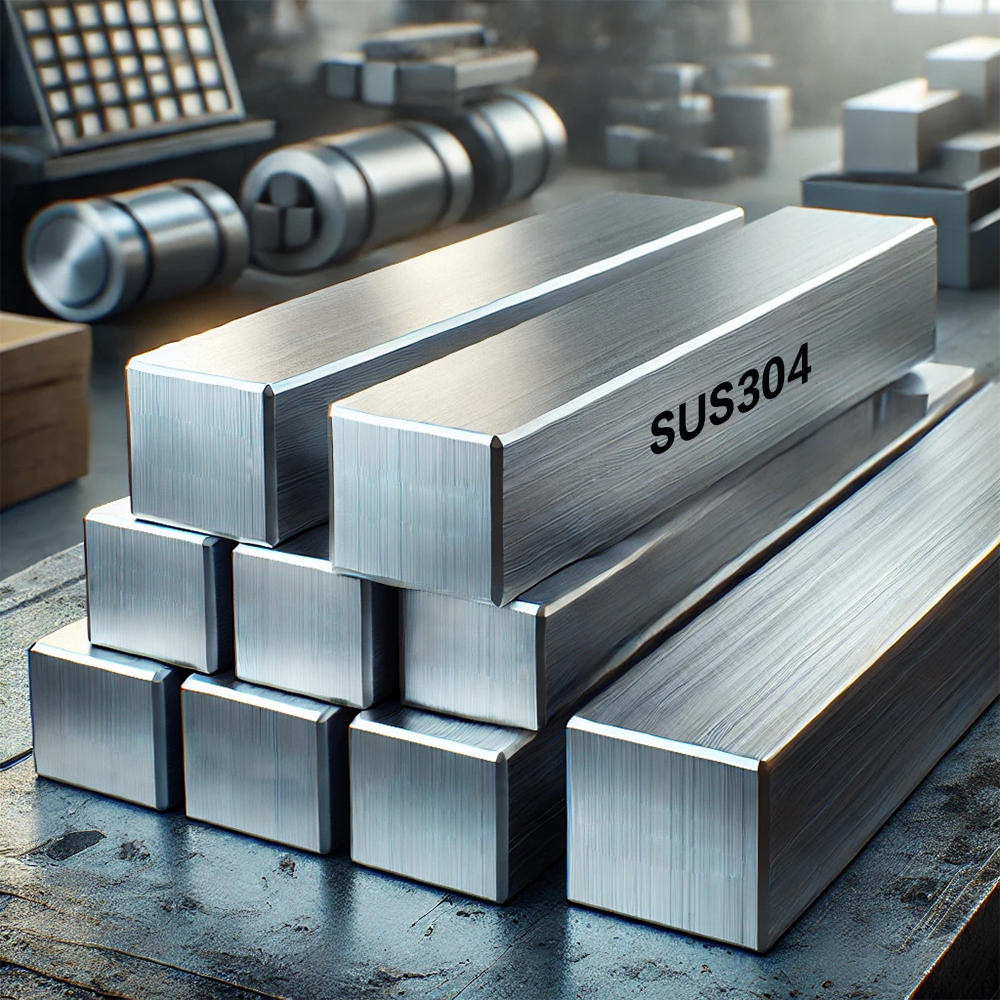
SUS304 is a widely used austenitic stainless steel that belongs to the 300 series. It is equivalent to AISI 304 and EN 1.4301. Known for its excellent corrosion resistance, high strength, good formability, and weldability, SUS304 is commonly used in food processing, chemical industries, construction, and kitchenware.
Key Features
Excellent Corrosion Resistance
- Resistant to moisture, acids, and oxidation in various environments.
- Ideal for marine, food, and chemical applications.
Good Weldability
- Can be easily welded using common welding techniques without requiring post-weld heat treatment.
High Strength & Toughness
- Offers good mechanical strength while maintaining ductility.
Good Formability
- Easily bent, deep-drawn, and machined into different shapes.
Non-Magnetic (in annealed condition)
- Can be used in electronic and medical applications where magnetism is a concern.
Hygienic & Easy to Clean
- Used in food processing, medical, and kitchenware industries due to its smooth surface and non-reactivity.
Chemical Composition
| Element | Composition (%) |
| Carbon (C) | ≤ 0.08 |
| Silicon (Si) | ≤ 1.00 |
| Manganese (Mn) | ≤ 2.00 |
| Phosphorus (P) | ≤ 0.045 |
| Sulfur (S) | ≤ 0.030 |
| Chromium (Cr) | 18.0 – 20.0 |
| Nickel (Ni) | 8.0 – 10.5 |
| Nitrogen (N) | ≤ 0.10 |
- High Chromium (Cr) & Nickel (Ni) Content → Provides excellent corrosion resistance and oxidation resistance.
- Low Carbon (C) Content → Reduces risk of carbide precipitation during welding.
Mechanical Properties
| Property | Value |
| Density | 7.93 g/cm³ |
| Tensile Strength | 515 – 720 MPa |
| Yield Strength | ≥ 205 MPa |
| Elongation | ≥ 40% |
| Hardness (Brinell) | ≤ 201 HB |
| Hardness (Rockwell B) | ≤ 92 HRB |
| Thermal Conductivity | 16.2 W/m·K |
| Melting Point | 1,400 – 1,450°C |
- Good mechanical strength, making it suitable for structural and industrial applications.
- High elongation (~40%), providing excellent formability and ductility.
- Good impact resistance, even at low temperatures.
SUS304 vs. Other Stainless Steels
| Property | SUS304 (AISI 304) | SUS316 (AISI 316) | SUS430 (AISI 430) | SUS201 |
| Corrosion Resistance | Good | Excellent | Moderate | Fair |
| Strength | High | High | Moderate | Moderate |
| Weldability | Excellent | Good | Poor | Good |
| Magnetism | Non-Magnetic | Non-Magnetic | Magnetic | Slightly Magnetic |
| Cost | Moderate | Higher | Lower | Lower |
Why Choose SUS304?
- More affordable than SUS316, but still offers good corrosion resistance.
- Better corrosion resistance than SUS430 and SUS201.
- Non-magnetic, making it ideal for medical and electronic applications.
Applications
SUS304 is widely used across multiple industries, including food, chemical, construction, and medical sectors.
Food & Beverage Industry
- Kitchen sinks, cookware, cutlery, and food processing equipment.
Construction & Architecture
- Building facades, railings, decorative panels, and roofing materials.
Medical & Pharmaceutical
- Surgical instruments, medical containers, and hospital equipment.
Chemical Industry
- Storage tanks, heat exchangers, and chemical pipelines.
Automotive & Transportation
- Exhaust systems, fuel tanks, and structural components.
Electronics & Aerospace
- Battery casings, connectors, and satellite components.
Heat Treatment Process
SUS304 is typically used in the annealed (solution-treated) condition.
Solution Annealing
- Heat to 1,010–1,120°C, then rapidly cool by water quenching.
- Restores corrosion resistance and mechanical properties.
Hardening
- SUS304 cannot be hardened by heat treatment.
- Can be work-hardened through cold working (e.g., rolling or drawing).
Stress Relieving
- Heat to 450–600°C to reduce internal stress.
Alternative Materials
- SUS316 (AISI 316) → Better corrosion resistance due to molybdenum (Mo) addition, but more expensive.
- SUS430 (AISI 430) → Cheaper, but lower corrosion resistance and not as strong.
- SUS201 → More affordable but lower nickel content, reducing corrosion resistance.
- SUS304L → Low-carbon version of SUS304, better for welding applications.
Conclusion
SUS304 stainless steel is a versatile, high-performance material with excellent corrosion resistance, good strength, and outstanding formability. It is widely used in food processing, construction, medical, and industrial applications.
Best for: Kitchenware, medical devices, chemical processing, and construction materials.
Why Choose SUS304? It offers a balance of cost, corrosion resistance, and mechanical properties.